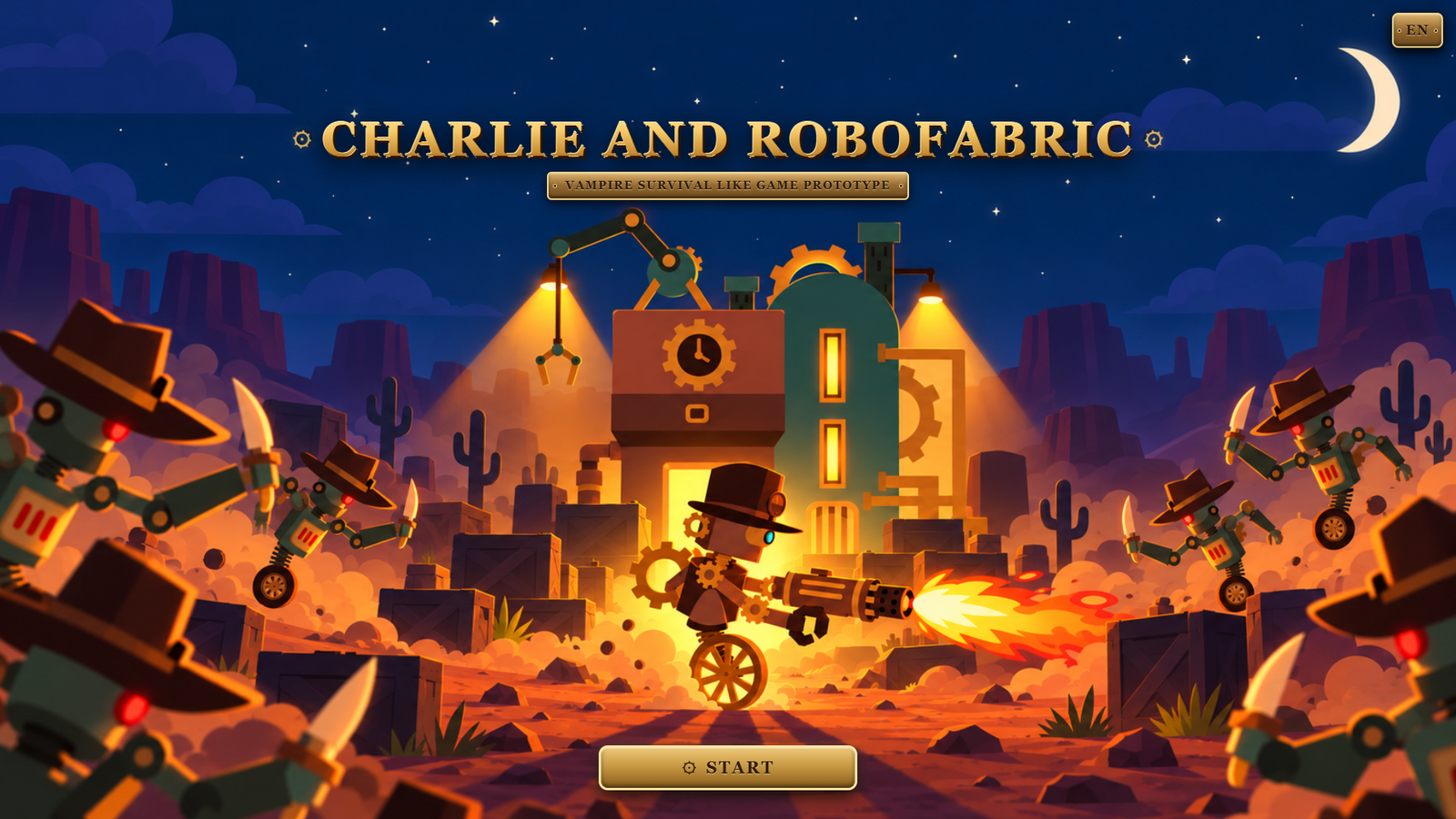
Project Description: Charlie and Robofabric is a 2D browser game inspired by Vampire Survivors, combining survival mechanics with base defense elements in a Steampunk and Wild West setting.
Players take control of Charlie, a mechanic robot who must defend his factory against endless waves of hostile robots. By defeating enemies, players collect resources, upgrade weapons, and strengthen their base.
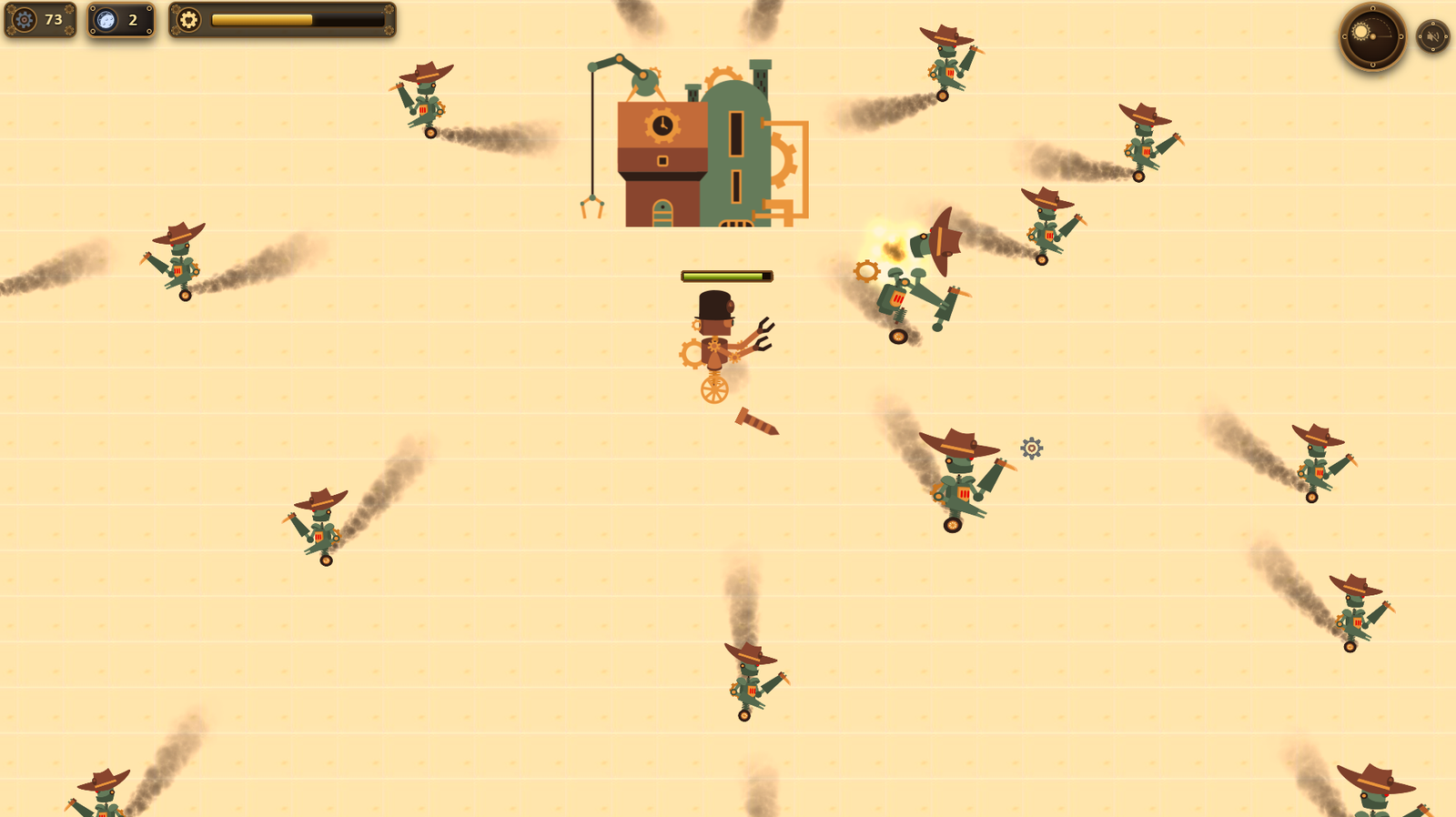
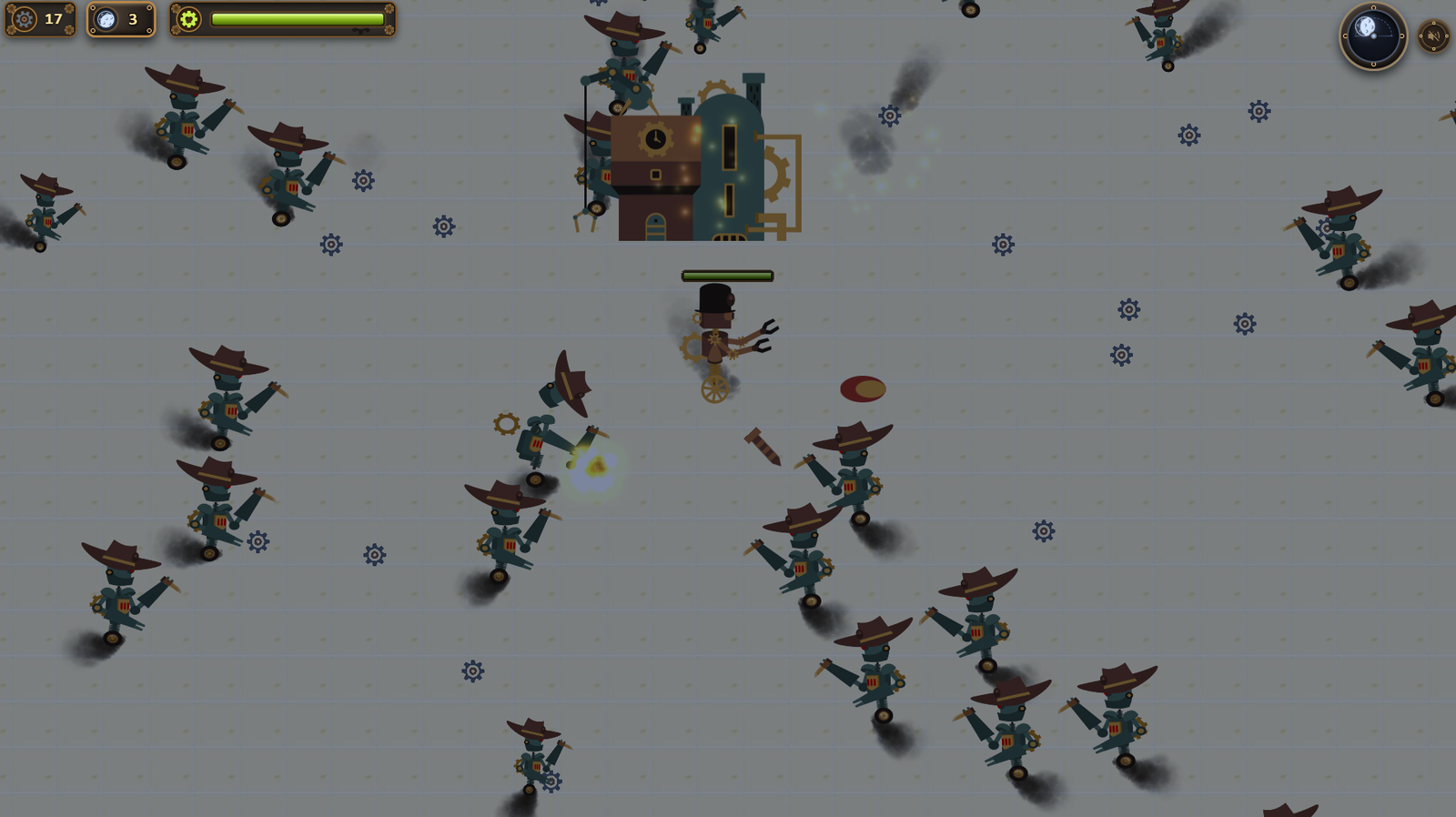
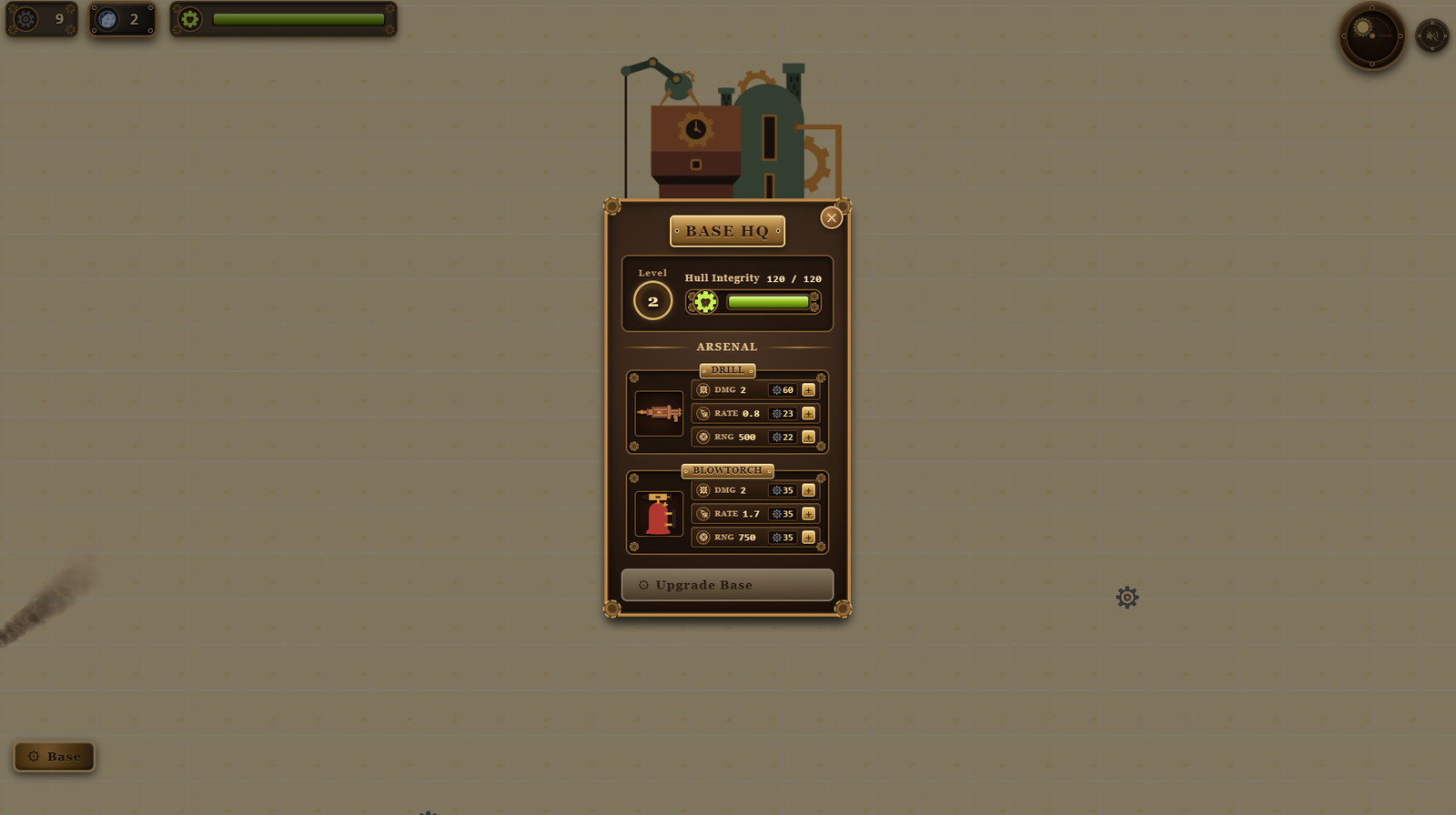
The gameplay revolves around a day-night cycle: during the day, players focus on upgrades and preparation, while at night, they defend the factory against incoming enemy waves.
My Role and Contributions: Character design and animation, UI development with Vue 3, visual effects, lighting setup, and sound design.
Key Technical and Creative Solutions:
Modular Character Design. Developed a modular approach to character design and animation, allowing me to create two fully original robot characters with high-quality animations. Two additional characters were designed but not implemented and can be easily integrated into the game in the future.
UI Development with Vue 3. Designed and developed Steampunk-inspired user interfaces using a mobile-first approach. The UI adapts to both mobile and desktop devices and is integrated with the Phaser game logic.
Positional Audio. Implemented distance-based audio using the Phaser Audio API. Sound volume changes based on the distance between the player and sound sources, creating a more immersive game environment.
Visual Effects. Created particle effects for projectile impacts, improving combat feedback and making interactions more visually satisfying.
Atmospheric Lighting. Configured global lighting and the color palette for nighttime scenes, inspired by a Western Night aesthetic, emphasizing the combination of Steampunk and Wild West themes.
Results: In just three weeks, our team developed and published a playable prototype featuring core survival, base defense, and weapon upgrade mechanics.
The game features responsive interfaces and cross-platform controls, making it playable on both desktop and mobile devices.
After release, we analyzed gameplay metrics and player feedback. Based on the results, the team decided not to continue development and to keep the game as a prototype.
This project gave us an opportunity not only to experiment with new gameplay mechanics and technical solutions but also to validate a game concept with real players.
We believe that successful game development is not just about building games. It also requires knowing when to stop investing resources in an idea if testing results do not demonstrate sufficient potential for further development.
Co-developer: Mark Bezdornov